




What Is a Hydrogen Refueling Station and How Does It Work?
 Author:Marina
 Times:2026-04-30
 Read:500
A hydrogen fueling system is the integrated set of equipment that receives or produces hydrogen, conditions and compresses it, stores it at suitable pressure levels, and safely dispenses it to fuel cell vehicles. When these subsystems are installed together at a vehicle-fueling facility, they form a hydrogen refueling station (HRS). Depending on the vehicle fleet and project requirements, the system may be designed for 35 MPa or 70 MPa vehicle fueling and may use delivered gaseous hydrogen, delivered liquid hydrogen, pipeline supply, or on-site hydrogen production.
In practice, hydrogen fueling system performance depends on much more than dispenser pressure. Daily hydrogen demand, peak-hour fueling, vehicle storage capacity, hydrogen supply pressure, compression duty, cascade arrangement, cooling requirements, control strategy and local regulations all influence the final system design.
Planning a hydrogen refueling project?
Share your expected hydrogen demand, vehicle type, target pressure and destination country for an initial configuration review.
Key Points
A hydrogen refueling station (HRS) is a facility that compresses, stores, and dispenses hydrogen fuel for fuel cell vehicles. Hydrogen is either delivered or produced on-site, then compressed to 35 MPa or 70 MPa, stored in cascade systems, and dispensed through a controlled fueling process. Modern stations follow standardized protocols such as SAE J2601 to ensure safe, fast, and reliable refueling.
What Is a Hydrogen Refueling Station?
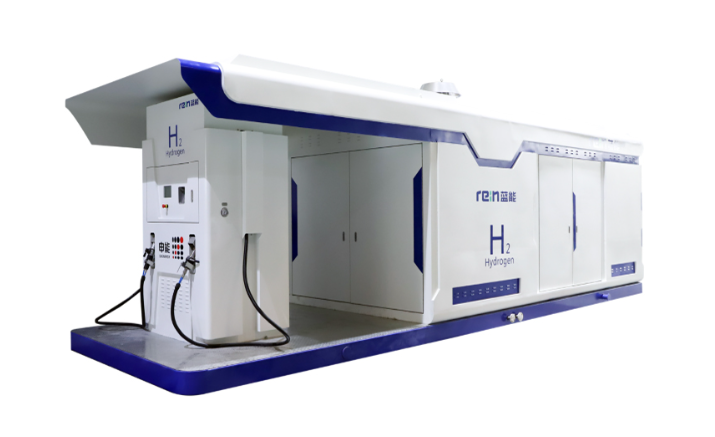
A hydrogen refueling station is a specialized infrastructure designed to supply hydrogen fuel to vehicles powered by fuel cells. Unlike traditional fueling stations, hydrogen stations require advanced systems to handle high-pressure gas safely and efficiently.
In practical terms, a complete hydrogen station integrates multiple subsystems—compression, storage, and dispensing—into a coordinated solution. Companies such as Rein have been focusing on delivering integrated hydrogen refueling station equipment and turnkey solutions, supporting both transportation and industrial hydrogen applications.
According to the International Energy Agency (IEA), hydrogen refueling infrastructure is expanding globally as part of the transition to low-carbon energy systems, particularly in sectors such as heavy-duty transport and public mobility.
Key Components of a Hydrogen Refueling Station
A typical hydrogen refueling station consists of several core components. Each plays a critical role in ensuring stable and efficient operation.
Hydrogen Supply System
Hydrogen can be supplied in two main ways:
Delivered hydrogen (via tube trailers or liquid hydrogen tankers)
On-site hydrogen production (typically via electrolysis)
For projects requiring flexible deployment, Rein supports both supply models and can design station configurations based on local infrastructure conditions.
Hydrogen Compressor
The compressor increases hydrogen pressure to the required level for storage and dispensing.
- 35 MPa: commonly used for buses and heavy-duty vehicles
- 70 MPa: used for passenger vehicles
Hydrogen compression is one of the most technically demanding parts of the system. Efficient compressor design directly affects station energy consumption and operating cost.
Use this hydrogen compressor selection guide to compare pressure, flow, purity, operating profile and maintenance requirements.
Hydrogen Storage Cascade System
Hydrogen is stored in high-pressure cylinders arranged in cascade configurations. This system allows hydrogen to be released in stages, improving fueling efficiency and reducing compressor workload.
Rein’s hydrogen storage cascade systems are designed to:
Optimize gas utilization
Reduce energy consumption
Ensure stable high-pressure output
This approach is widely adopted in modern stations and aligns with industry best practices.
Hydrogen Dispenser
The dispenser is the interface between the station and the vehicle. It controls hydrogen flow, pressure, and temperature during refueling.
Modern dispensers:
- Follow SAE J2601 fueling protocols
- Include real-time communication with the vehicle
- Ensure safe and fast fueling within minutes
- Control and Safety System
Hydrogen stations operate under strict safety requirements. Control systems monitor key parameters such as pressure, temperature, and leakage.
Rein integrates intelligent control systems to support:
- Automated operation
- Real-time monitoring
- Emergency shutdown protection
How Does a Hydrogen Refueling Station Work?
The operation of a hydrogen refueling station can be summarized in four steps:
Step 1: Hydrogen Delivery or Production
Hydrogen is either delivered to the station or generated on-site. It is initially stored at lower pressure levels.
Step 2: Compression
The hydrogen is compressed to high pressure (35 MPa or 70 MPa), preparing it for storage and dispensing.
Step 3: Storage in Cascade Systems
Compressed hydrogen is stored in multiple tanks at different pressure levels. This staged storage system improves efficiency and ensures consistent fueling performance.
Step 4: Dispensing
When a vehicle connects to the dispenser:
- The system communicates with the vehicle tank
- Hydrogen is delivered in controlled stages
- Temperature is managed to ensure safety
A full refueling process typically takes 3–5 minutes, comparable to traditional fueling.
35 MPa vs. 70 MPa Hydrogen Fueling Systems
| Design Question | 35 MPa Station | 70 MPa Station |
|---|---|---|
| Typical Application | Common in buses and some medium- or heavy-duty fleets. | Common in light-duty passenger fuel cell vehicles; project-specific heavy-duty applications also exist. |
| Vehicle Interface | Must match the vehicle storage system and applicable protocol. | Must match the vehicle storage system and applicable protocol. |
| Station Storage | Sized above vehicle working pressure according to the station architecture and applicable code. | Generally requires higher-pressure storage and a compatible dispensing strategy. |
| Cooling Requirement | Depends on fueling rate, vehicle requirements and the applicable protocol. | Fast light-duty fueling commonly requires controlled hydrogen delivery temperature. |
| Key Sizing Input | Fleet schedule, hydrogen required per vehicle and back-to-back fueling demand. | Vehicle capacity, fueling protocol, cooling duty and peak demand. |
The correct station cannot be chosen from the words “35 MPa” or “70 MPa” alone. Vehicle storage capacity, target fill time, number of vehicles, arrival pattern and station availability targets are equally important.
The choice between 35 MPa and 70 MPa hydrogen fueling systems affects the vehicle interface, station storage, cooling strategy and equipment configuration.
Types of Hydrogen Refueling Stations
Depending on hydrogen supply and application scenarios, stations can be classified into:
→ On-Site Production Stations
Produce hydrogen via electrolysis
Suitable for renewable energy integration
→Off-Site Delivery Stations
Hydrogen transported from centralized production facilities
Lower initial investment
→ Mobile Hydrogen Stations
Skid-mounted systems
Flexible deployment for temporary or remote use
Rein provides modular and scalable solutions for each type, enabling customers to adapt to different project requirements.
Efficiency and Energy Considerations
Hydrogen refueling stations require significant energy input, particularly for compression and cooling. According to the U.S. Department of Energy (DOE), compression can account for a large portion of station energy consumption.
To improve efficiency, modern stations:
- Use cascade storage systems
- Optimize compressor operation
- Apply advanced thermal management
These technologies are essential for reducing operational costs and improving system performance.
Safety and Standards
Hydrogen stations are designed to meet strict international standards, including:
- SAE J2601 (fueling protocols)
- ISO standards for hydrogen systems
- Pressure vessel and safety regulations
Safety systems typically include:
- Leak detection
- Ventilation systems
- Emergency shutdown mechanisms
These measures ensure safe operation under high-pressure conditions.
How to Design and Size a Hydrogen Fueling System
Hydrogen fueling system sizing should begin with the operating demand, not with a standard equipment package. The purpose is to balance hydrogen supply, compression, storage and dispensing so the system can support both daily throughput and the busiest fueling period.
1. Define the Vehicle Fleet
Confirm the vehicle type, onboard storage pressure, hydrogen capacity per vehicle and relevant fueling interface. A passenger-car station, bus depot and heavy-truck station have very different demand patterns.
2. Calculate Daily and Peak Hydrogen Demand
Daily capacity in kg/day is important, but the station must also handle the busiest fueling period. Provide:
- Number of vehicles per day;
- Hydrogen required per vehicle;
- Maximum vehicles per hour;
- Required back-to-back fills; and
- Available fueling window.
3. Confirm the Hydrogen Supply Conditions
Identify the supply method, inlet pressure range, hydrogen quality, delivery frequency and backup arrangement. For tube-trailer supply, use the trailer’s usable hydrogen over the compressor inlet range rather than relying only on nominal capacity.
4. Establish the Fueling Performance Target
Define the required pressure class, target fill time, dispenser count, simultaneous fueling requirement and availability target. Faster or more concentrated fueling can require greater compression, storage and cooling capacity.
5. Review the Site and Regulatory Conditions
Provide the destination country, site layout, ambient-temperature range, utility availability, hazardous-area requirements and applicable local codes. These factors influence equipment selection, layout, documentation and permitting.
6. Define the Delivery Boundary
Confirm whether the project requires individual equipment, an integrated equipment package, station controls, system integration, engineering construction, commissioning support or a broader EPC scope.
Need help defining the equipment scope?
Send Rein the six groups of information above for an initial HRS configuration review.
Request an HRS Configuration Review
Use this step-by-step guide to learn how to size a hydrogen refueling station from daily demand, peak fills, compressor recovery and cascade storage.
What Drives Hydrogen Fueling System Cost?
There is no reliable universal hydrogen fueling system price because project scope and operating requirements vary significantly. The main cost drivers include:
- Hydrogen supply method and inlet conditions;
- Required station capacity and peak fueling rate;
- H35 or H70 vehicle interface;
- Compressor type, flow and redundancy;
- High-pressure storage capacity;
- Number of dispensers and fueling positions;
- Precooling and thermal-management requirements;
- Civil works, utilities and site constraints;
- Local certification and permitting; and
- Delivery scope, commissioning and after-sales support.
A useful quotation therefore requires more than a target pressure. Providing the fleet schedule, hydrogen supply conditions and project location helps the engineering team avoid an undersized or unnecessarily expensive proposal.
This guide explains the main hydrogen refueling station cost factors, including equipment, site work, utilization and project scope.
Why Hydrogen Refueling Stations Matter
Hydrogen refueling infrastructure is a key enabler of the hydrogen economy. It supports:
- Zero-emission transportation
- Fast refueling times
- Long driving ranges for fuel cell vehicles
As global demand for clean energy grows, hydrogen is expected to play a major role in decarbonizing sectors such as transportation and industry.
With increasing project experience and technological development, companies like Rein are contributing to the deployment of reliable and scalable hydrogen refueling solutions worldwide.
Looking for Hydrogen Refueling Station Solutions?
If you are planning a hydrogen refueling project, choosing the right equipment and system design is critical.
Rein offers:
- Complete hydrogen refueling station equipment
- Customized system design (35 MPa / 70 MPa)
- Turnkey EPC solutions from design to commissioning
Contact us to get a tailored hydrogen refueling station solution based on your project requirements.
Share:

Pioneering the future of clean energy,
exploring innovative hydrogen technologies
Contact us for expert storage and transportation solutions