




What Is a Liquid Oxygen System? A Practical Guide to Tanks, Components and Safety
 Author:
 Times:2026-09-14
 Read:
Read:
A liquid oxygen system receives oxygen as a cryogenic liquid, stores it in an insulated liquid oxygen tank, converts it into gas through a vaporizer, and regulates the gas for use. The system typically includes the tank, fill connection, pressure-building circuit, vaporizer, pressure-control equipment, relief devices, valves, piping, instrumentation and site safety controls. It is used when an operation needs a steadier or larger oxygen supply than individual cylinders can conveniently provide.
Key Takeaways
- A liquid oxygen tank is the storage core, but it is not the complete system.
- Oxygen's normal boiling point is 90.188 K, or about -183°C, so storage and transfer equipment must be designed for cryogenic service.
- Heat entering the tank turns some liquid into gas; pressure control and correctly sized relief devices are therefore essential.
- Oxygen does not burn, but it accelerates combustion. Cleanliness, material compatibility, ventilation and separation from combustibles are fundamental design concerns.
- Tank capacity alone does not determine the right system. Buyers should define peak flow, daily consumption, delivery frequency, required outlet pressure, site conditions and applicable rules.
How Does a Liquid Oxygen System Work?
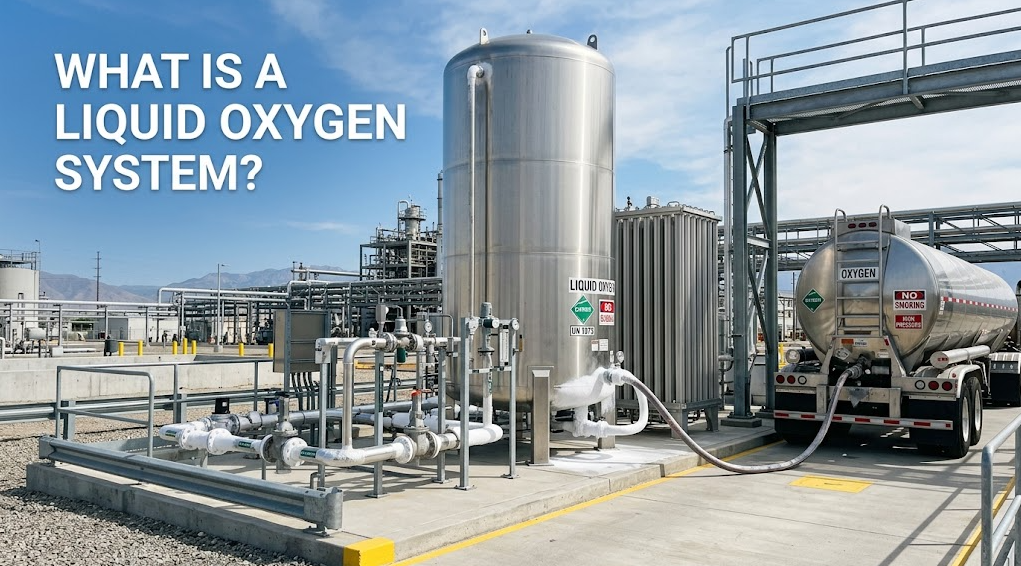
Liquid oxygen, commonly shortened to LOX, is produced in an air-separation plant and delivered by a cryogenic tanker. During a fill, oxygen passes through a dedicated connection into a vacuum-insulated storage vessel. The insulation limits heat transfer, but it cannot eliminate it entirely.
When oxygen is required, liquid leaves the tank and enters an ambient-air or other suitable vaporizer. The vaporizer absorbs heat and changes the liquid into gaseous oxygen. Regulators or a pressure-control station then condition the gas before it enters the user's distribution network or process.
System Flow at a Glance
> Cryogenic tanker → fill connection → liquid oxygen tank → vaporizer → pressure regulation and monitoring → user process
This flow looks simple, but each interface matters. The fill rate must suit the tank and transfer arrangement; the vaporizer must support the peak rather than only the average demand; and the downstream system must remain within its permitted pressure and purity envelope.
What Is Inside a Liquid Oxygen Tank System?
The European Industrial Gases Association (EIGA) defines a bulk liquid storage installation as the fixed assembly of the tank and connected equipment, which can include pumps, filling equipment, pressure-build vaporizers, pressure-relief devices, controls and ancillary equipment. That is a useful purchasing distinction: a tank quotation and an operable oxygen supply system are not necessarily the same scope.
| System element | Main function | What the buyer should confirm |
|---|---|---|
| Liquid oxygen tank | Stores LOX while limiting heat ingress | Usable capacity, design pressure, fill limits, insulation concept, code and inspection basis |
| Pressure-building circuit | Vaporizes a controlled amount of liquid to maintain delivery pressure | Required operating range and response under changing demand |
| Vaporizer | Changes cryogenic liquid into gas | Peak flow, duty cycle, climate, icing allowance and redundancy |
| Valves, piping and controls | Direct, isolate, monitor and regulate oxygen | Oxygen-service materials, cleaning, layout, alarms and maintainability |
| Relief and vent system | Protects equipment from unacceptable pressure and routes discharge | Credible cases, discharge location, icing risk and local requirements |
Why Is Oxygen Service Different?
Oxygen is an oxidizer. It can cause materials that normally burn slowly to ignite more readily and burn much faster in an oxygen-enriched atmosphere. OSHA notes that oxygen-rich atmospheres present a fire and explosion hazard because ordinary combustible materials burn more rapidly; its guidance commonly uses more than 23.5% oxygen by volume as the oxygen-rich threshold.
For that reason, equipment cleanliness is an engineering control, not a cosmetic detail. Oil, grease, incompatible seals, particles and residues can become ignition hazards. The design review should address oxygen compatibility, cleaning procedures, ignition mechanisms, vent location, vehicle impact protection, access control and emergency response. Personnel also need protection from cryogenic contact, which can cause severe cold burns.
The installation must follow the rules that apply in its country and industry. EIGA's *DOC 127/23: Bulk Liquid Oxygen, Nitrogen and Argon Storage Systems at Production Sites* provides design, installation, operation and maintenance guidance for defined bulk systems, while noting that engineering judgment and national or local requirements still apply. Its scope should be checked before using it for a particular project.
How Should You Size a Liquid Oxygen Tank?
Start with the demand profile—not a preferred tank model. Record normal flow, maximum simultaneous flow, operating hours and any short high-demand events. Convert these into daily or weekly consumption, then review delivery lead time, refill frequency, reserve policy and the supplier's practical fill limits.
Next, size the vaporization and pressure-control sections against peak flow and local weather. An ambient-air vaporizer that performs well in warm, intermittent service may behave differently during sustained demand in cold or humid conditions. Where continuity is critical, the design team may evaluate parallel vaporizers, changeover logic or another backup arrangement.
Finally, check the complete site: tanker access, filling position, foundations, drainage, ventilation, safe venting, separation distances, fire exposure, nearby combustibles, overhead lines and future expansion. A larger tank can reduce deliveries, but it can also change plot-space, permitting and inventory implications. The best answer is therefore a system balance, not simply the largest available vessel.
Liquid Oxygen Tank vs. Oxygen Cylinder Supply
Cylinders can suit lower or intermittent demand and offer modularity. A bulk liquid oxygen system becomes worth evaluating when cylinder handling, changeovers and delivery frequency create operational constraints. It can provide continuous gaseous oxygen from a central source, but adds cryogenic equipment, tanker access, fixed-site safety controls and specialist maintenance.
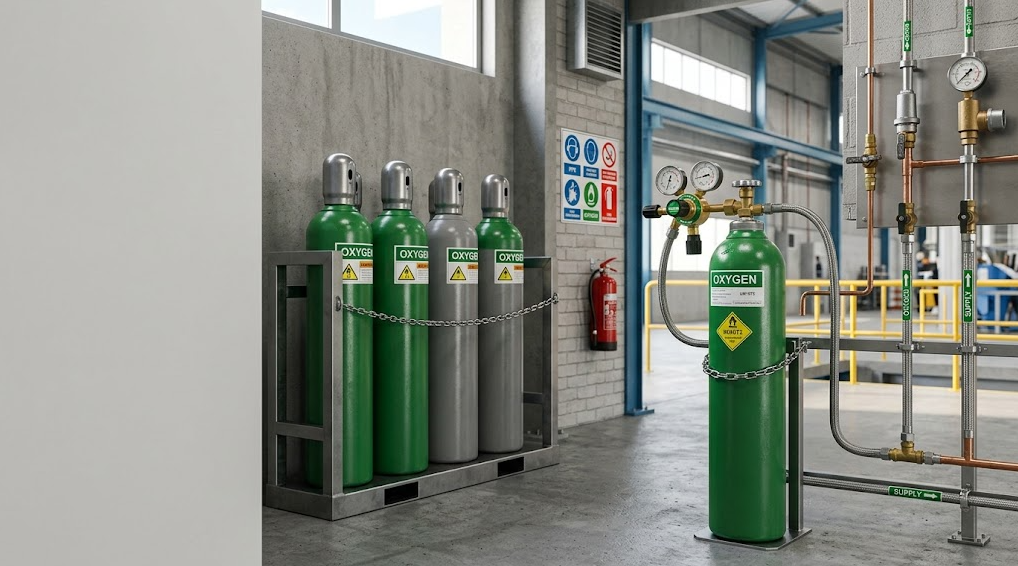
Unlike a cryogenic tank, a conventional compressed oxygen cylinder stores oxygen in gaseous form at ambient temperature.
The correct comparison should include consumption variability, required availability, gas quality, site constraints and total delivered cost. It should not assume that bulk LOX is automatically cheaper or safer for every application.
What Information Should a Buyer Send to a Supplier?
Before requesting a proposal, prepare:
1. Oxygen purity or applicable product specification.
2. Average and peak gaseous flow, plus the duration of peak events.
3. Required outlet pressure and acceptable pressure variation.
4. Expected daily or monthly consumption and desired reserve period.
5. Project country, installation environment and governing code.
6. Site layout, tanker route, climate and available utilities.
7. Required scope: tank only, vaporization package, controls, installation support, commissioning, documentation or after-sales service.
These inputs make quotations easier to compare and reduce the risk of discovering a capacity or interface gap after equipment selection.
Discuss an Oxygen Storage Project with Rein
Rein Hytec designs and manufactures equipment for hydrogen, CNG, electronic specialty gases, rare gases and other industrial gases. Its published rare and industrial gas equipment portfolio includes customizable compressed-gas storage equipment for oxygen and other gases. A liquid oxygen system is a different cryogenic equipment category, so the applicable product, materials, pressure boundary, documentation and supply scope must be confirmed for each project.
If you are evaluating a liquid oxygen tank or a wider oxygen supply system, send Rein your medium specification, consumption profile, outlet conditions, site location and required scope through the project contact page. The engineering and commercial teams can review the requirement and confirm whether Rein's available equipment and services fit the project—without forcing a standard model onto an undefined duty.
Frequently Asked Questions
What temperature is liquid oxygen stored at?
NIST lists oxygen's normal boiling point as 90.188 K, approximately -182.96°C, at one atmosphere. Actual tank temperature and pressure vary together and depend on the system design and operating state.
Is a liquid oxygen tank pressurized?
Many bulk LOX vessels operate above atmospheric pressure to support storage and delivery, but there is no single pressure for every tank. The design pressure, normal operating range and relief settings must be taken from the selected vessel and applicable code.
Does liquid oxygen burn?
No. Oxygen is not a fuel, but it strongly supports combustion. Leaks can enrich the surrounding atmosphere, allowing combustible materials to ignite more easily and burn more intensely.
What is the most important liquid oxygen tank specification?
There is no single deciding number. Usable capacity, design and operating pressure, maximum allowable fill, insulation performance, code basis, outlet duty, relief strategy and site compatibility must be reviewed together.
Share:

Pioneering the future of clean energy,
exploring innovative hydrogen technologies
Contact us for expert storage and transportation solutions